Licensed Water Intrusion Repair Contractor in Lynnwood, WA
A stain under the window that keeps coming back, soft trim, bubbling paint, or a musty room that never dries out? That is water getting into your walls. Call, and a licensed, IICRC-certified crew is dispatched to your home immediately. They find where the water is getting in, dry the structure, and repair the damage it left behind.
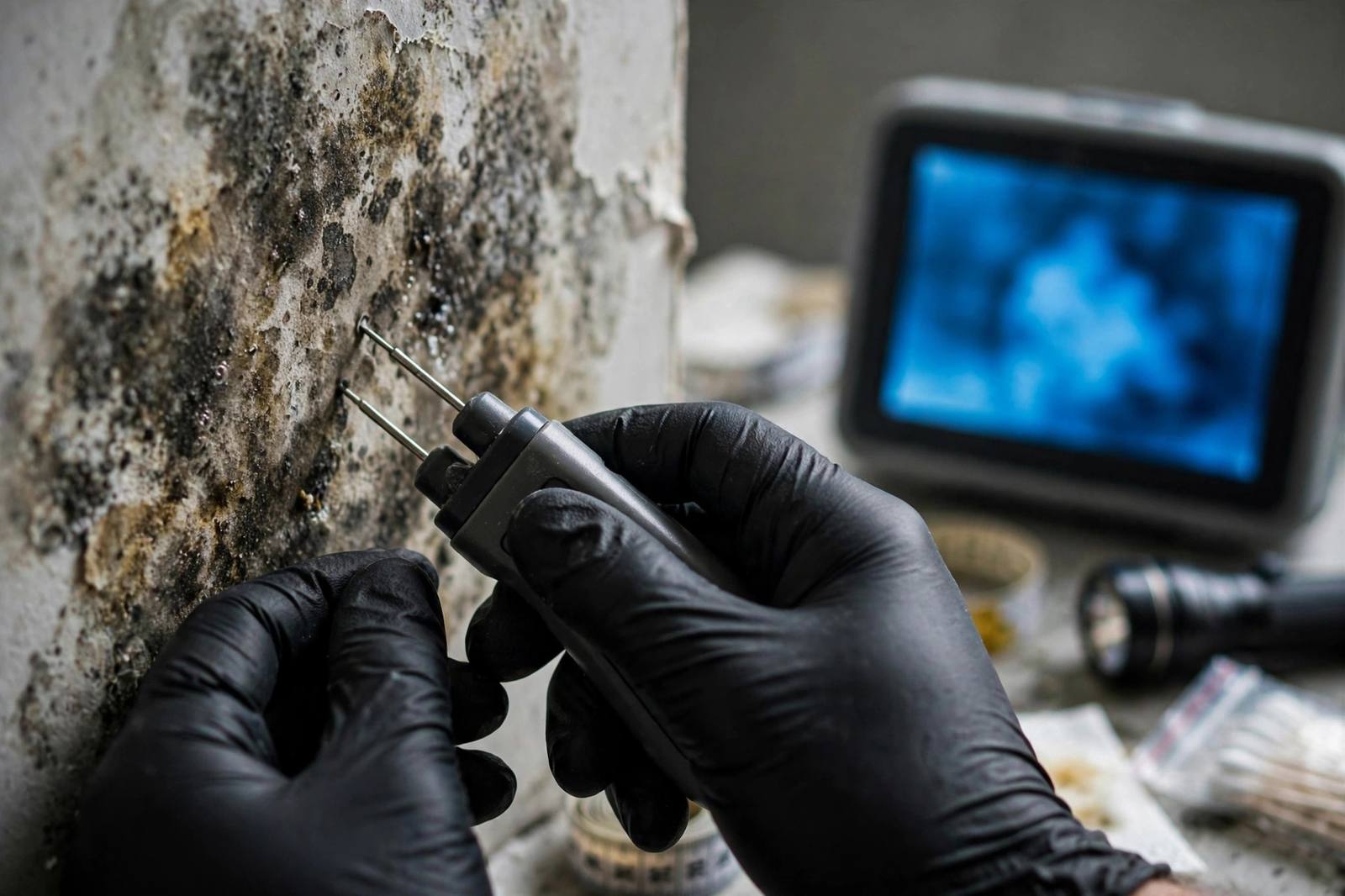
- Leak entry point traced with moisture meters and thermal imaging
- Walls opened only where readings show water
- Rotted framing and sheathing repaired
- Written scope and estimate before work starts
Tell Us What You're Seeing. We Will Call You Back Fast.
Where is the stain, damp spot, or soft area, and does it get worse when it rains? A real person will call you back quickly. If water is actively coming in, call (425) 845-0289 now.
Or tell us what happened
What you see, where, and we will call you back fast.
Request received
Thanks. We will call you back shortly. If water is still coming in, call (425) 845-0289 right now.
What Does Water Intrusion Repair Involve?
Water intrusion repair means finding where rain or groundwater enters the building, drying the wet framing, removing rot, and rebuilding damaged walls, floors, and trim so it stops.
Water Intrusion Repair in Lynnwood, WA: Why It's Different From a Leak
A burst pipe announces itself. Water intrusion does not. Rain finds a small gap in the building and seeps in a little at a time, storm after storm, often for months before anything shows inside. By the time you see a stain, the sheathing, studs, or sill plate behind it may already be soft.
That is why water intrusion repair in Lynnwood, WA is a different job from ordinary water cleanup. It has two halves, and both have to be done:
- Find and stop the entry point. Otherwise the next storm undoes the repair.
- Dry and repair everything the water reached, including the parts you cannot see.
Where Water Gets Into Homes Here
Lynnwood and south Snohomish County get months of steady, wind-driven rain. Most intrusion we find starts in one of these places:
Windows and doors
Failed flashing or sealant lets rain run behind the trim and into the wall.
Siding
Older panel siding, cracked lap siding, and gaps at corners let water behind the cladding.
Roof-to-wall joints
Missing kick-out flashing sends roof water straight into the wall below.
Deck ledgers
Where a deck attaches to the house, water gets behind the ledger board and into the rim joist.
Foundations
Saturated soil pushes groundwater through cracks into crawl spaces and basements.
Penetrations
Vents, hose bibs, and light fixtures that were never sealed properly.
Signs of Water Intrusion in Your Walls
- A stain under a window or in a ceiling corner that grows after rain
- Paint that bubbles, peels, or blisters on one wall
- Baseboards or window trim that feel soft or swollen
- Drywall that crumbles or feels damp
- A musty smell in one room that never goes away
- Mold spotting along the bottom of a wall
- Siding that is soft, cracked, or bowed outward
- A spongy area on the floor near an exterior wall or a deck door
Moisture meters and thermal imaging confirm what is wet without opening the wall.
How Our Water Intrusion Repair Works
Inspection and moisture mapping
We check the inside and outside of the wall with moisture meters and thermal imaging to find how far the water traveled and where it is entering.
Open only what is needed
Drywall, trim, or siding is opened where readings show water, not across the whole wall.
Remove wet and rotted materials
Soaked insulation, crumbling drywall, and rotted sheathing or framing come out. Mold is cleaned and treated under containment.
Dry the structure
Air movers and dehumidifiers dry the wall cavity and framing until moisture readings reach their dry standard.
Repair the framing
Rotted studs, plates, rim joists, and sheathing are replaced or reinforced.
Stop the entry point and finish
Flashing, sealant, and trim are corrected where the water got in. Insulation, drywall, trim, and paint are put back. Anything outside our scope, such as a full re-side or roof replacement, is spelled out so you know exactly what to ask that trade for.
Wood Rot Repair in Lynnwood, WA
Wood that stays wet season after season starts to rot, and rot spreads. Wood rot repair in Lynnwood, WA is usually needed at:
- Sill plates and rim joists
- Window framing
- Deck ledgers
- The bottom of exterior walls
Here is how we handle it:
- Soft or crumbling wood is cut out back to sound material.
- Structural members are replaced or sistered.
- Sheathing is patched.
- Sound wood is dried and treated so the rot does not continue.
"Dry rot" is a misleading name, because it still starts with moisture. Once the wood is dry and the water source is closed off, it stops spreading. That is why structural wood repair always goes together with fixing the intrusion.
Leaking Deck Repair: When Water Gets Into the House From the Deck
A deck attached to the house is one of the most common sources of hidden water intrusion here. Rain runs down the siding, gets behind the ledger board, and soaks the rim joist and wall framing inside the house. Often the first sign is a stain on the ceiling or wall of the room below the deck.
Leaking deck repair at the house connection means:
- Removing the damaged siding at the ledger
- Drying and repairing the rotted rim joist and sheathing
- Correcting the flashing so water runs away from the house instead of into it
Inside, the wet drywall and insulation are removed, dried, and replaced.
What Does Water Intrusion Repair Cost in Lynnwood, WA?
There is no single price, because no two leaks are the same. Water intrusion repair cost in Lynnwood, WA comes down to these factors:
| What affects the cost | Smaller job | Larger job |
|---|---|---|
| How long water has been getting in | Caught early, one storm | Months or years |
| How far it traveled | One wall section | Several rooms or floors |
| Wood rot | None, framing dries and stays | Studs, plates, or rim joist replaced |
| Access | Drywall from inside | Siding or deck boards removed outside |
| Mold | None | Containment and remediation needed |
| Finishes | Paint and trim | Flooring, cabinets, or tile |
You get a written scope and estimate after the inspection, before any work starts. Catching intrusion early is the biggest way to keep the cost down.
Why Homeowners Choose Us as Their Water Intrusion Repair Contractor in Lynnwood, WA
- One team for the whole job. Finding the leak, drying, rot repair, and rebuild, without juggling three companies.
- Licensed and IICRC-certified. Licensed Washington contractors with IICRC-certified technicians, following ANSI/IICRC S500.
- Measured, not guessed. Moisture readings show what is wet before anything is opened and confirm it is dry before it is closed.
- Honest scope. We tell you plainly what we repair and what needs another trade.
- Immediate dispatch. A real person answers, and a crew is sent right away.
Does Insurance Cover Water Intrusion Damage?
Often not, and it is better to know that up front. Most homeowners policies cover sudden and accidental water damage, but they exclude damage from repeated seepage, wear and tear, and long-term leaks, which is how most intrusion happens. Damage caused by a single sudden event, like a storm that tears off flashing or siding, may be covered.
Every policy is different, so ask your agent. We photograph and document what we find, either way.
Water Intrusion Repair Near You
We handle water intrusion repair in Lynnwood (98036, 98037, 98087) and nearby, including:
- Alderwood Manor
- Martha Lake
- Edmonds
- Mountlake Terrace
- Brier
- Mukilteo
- Mill Creek
- Bothell
- North Creek
Water Intrusion FAQs
Intrusion gets worse after rain and is usually on an exterior wall, window, or below a deck. A plumbing leak stays wet in dry weather. Moisture readings over a few days tell them apart.
It depends on how long water has been getting in, how far it traveled, and whether framing has rotted. You get a written estimate after inspection.
Yes. Finding the entry point is the first step. We trace it with moisture meters and thermal imaging before we open anything.
Usually only the rotted sections are replaced or sistered. Sound wood is dried and kept.
Only if the damage is behind it, like at a deck ledger or under a window. We remove the smallest section that lets us repair the framing properly.
We repair the water damage a leaking deck causes to the house: the ledger area, rim joist, wall framing, and interior finishes. We also correct the flashing where the deck meets the house.
Active water coming in during a storm is. A slow, recurring stain is not an emergency, but it should be checked soon, because rot and mold keep growing every wet season.
Usually not when it is gradual seepage. It may be covered if a single storm caused the damage. Check your policy.
Related Services
Stop the Leak Before It Spreads. Call Now.
(425) 845-0289Water intrusion repair in Lynnwood, WA and south Snohomish County. We find the leak, dry the structure, and repair the damage. Crews dispatched immediately.