Mold Remediation in Lynnwood, WA
Seeing black spots or smelling that musty odor in your Lynnwood home? Do not scrub it or run fans over it. We contain the area, remove the growth, and fix the moisture source.
- Emergency calls answered right away
- Moisture meters verify every dry-out
- A written scope before work starts
Tell Us What Happened. We Will Call You Back Fast.
Send the details below and a real person will call you back quickly. If water is actively coming in, call (425) 845-0289 right now instead.
Or tell us what you found
Where is it, and how big? Send the details and we will call you back fast.
Request received
Thanks. We will call you back shortly. If water is still coming in, call (425) 845-0289 right now.
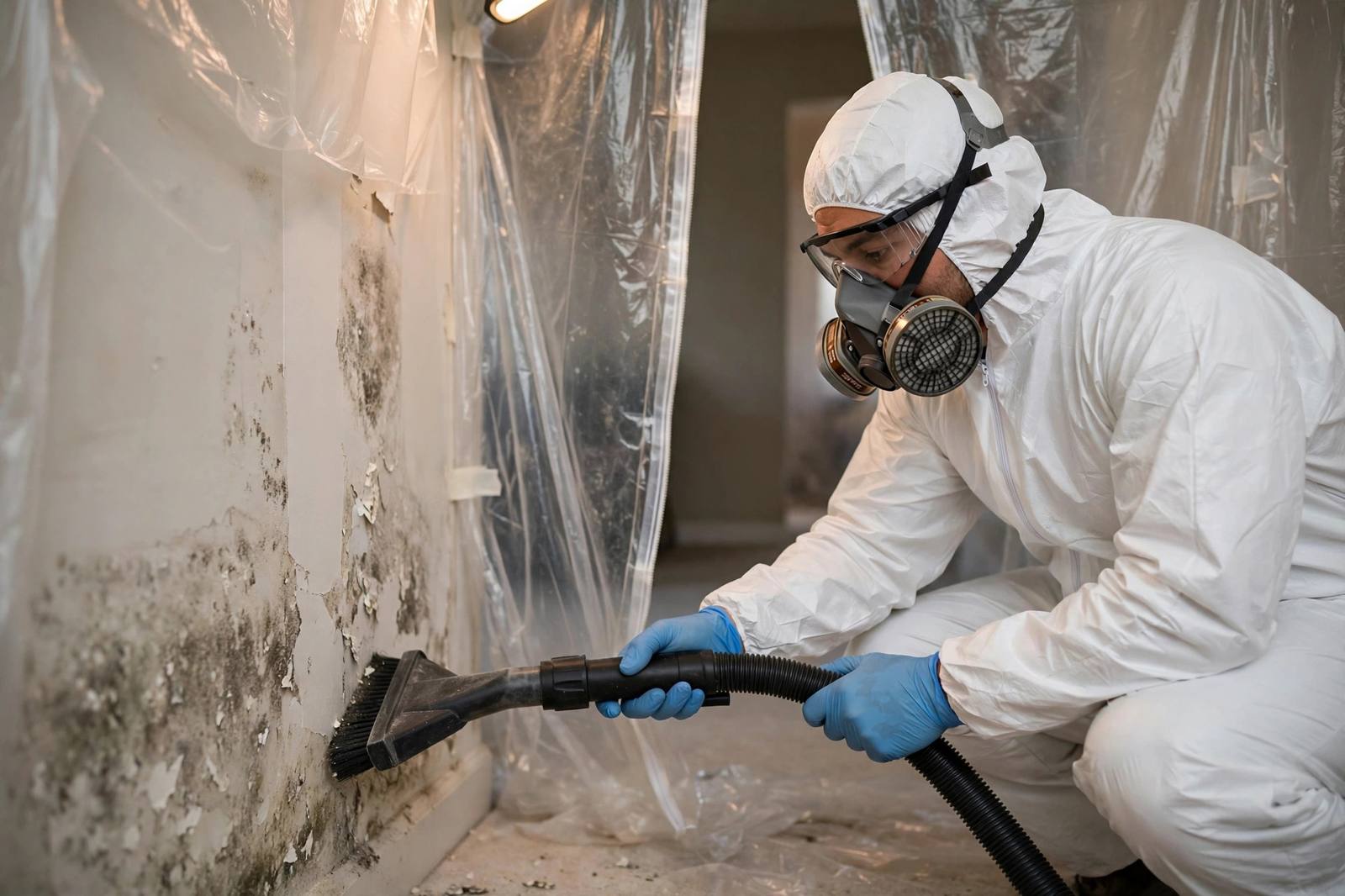
Mold remediation in Lynnwood, WA and across Snohomish County is about more than wiping a stain. Mold takes hold wherever moisture lingers: behind shower walls, under sinks, in crawl spaces, and inside wall cavities after a leak. Real remediation seals the area under containment, removes what cannot be saved, HEPA-vacuums and treats what stays, then fixes the moisture source so growth does not return.
Here is the honest part most companies skip: no one can remove every spore from a home, and the EPA says so plainly. The goal is removing active growth and returning the space to normal, dry conditions. If you see black spotting in your Lynnwood home, smell that damp earthy odor in the basement or bathroom, or your allergies flare indoors, give us a call. We inspect with moisture meters, show you what we find, and give a written scope before any work starts.
When Mold Needs a Professional, and When It Doesn't
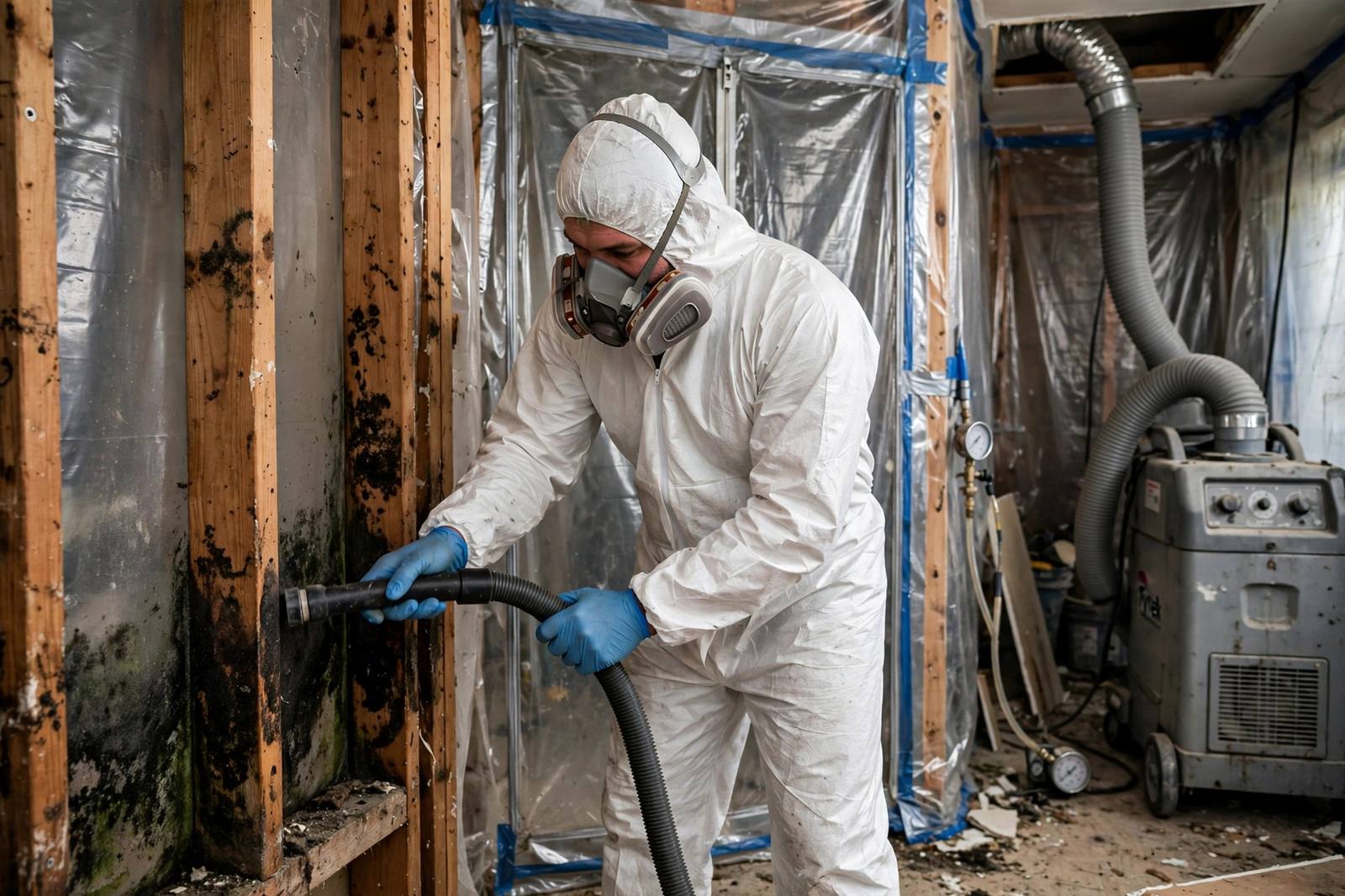
The EPA draws the line at about 10 square feet, roughly a 3-foot by 3-foot patch.
| Situation | Typical approach |
|---|---|
| Under about 10 square feet on a hard, nonporous surface, moisture source fixed | A homeowner can often clean it with detergent and water, wearing gloves, goggles, and an N95 respirator |
| More than about 10 square feet | Professional help recommended |
| Mold on drywall, carpet, insulation, or ceiling tiles | Porous materials are usually removed, not cleaned |
| Mold after a flood, sewage backup, or long-term leak | Professional work; contaminated materials typically removed |
| Mold in or near the HVAC system | Professional assessment of the system |
| Musty smell, nothing visible | Find the moisture source and check hidden areas before disturbing anything |
| Someone at home has asthma, allergies, or a weakened immune system | Talk to a doctor and limit disturbing the mold |
Bleach isn't the fix. EPA and OSHA remediation guidance don't recommend biocides like bleach as a routine practice, because the goal is to remove the mold, not just kill it, and dead spores can still cause problems. Color tells you little: mold comes in many colors, including white and black, and any growth should be handled carefully.
Our Mold Remediation Services, Step by Step
We follow the ANSI/IICRC S520 approach. Ask any company you're considering what standard it follows and how it verifies its work.
Assess and Find the Moisture Source
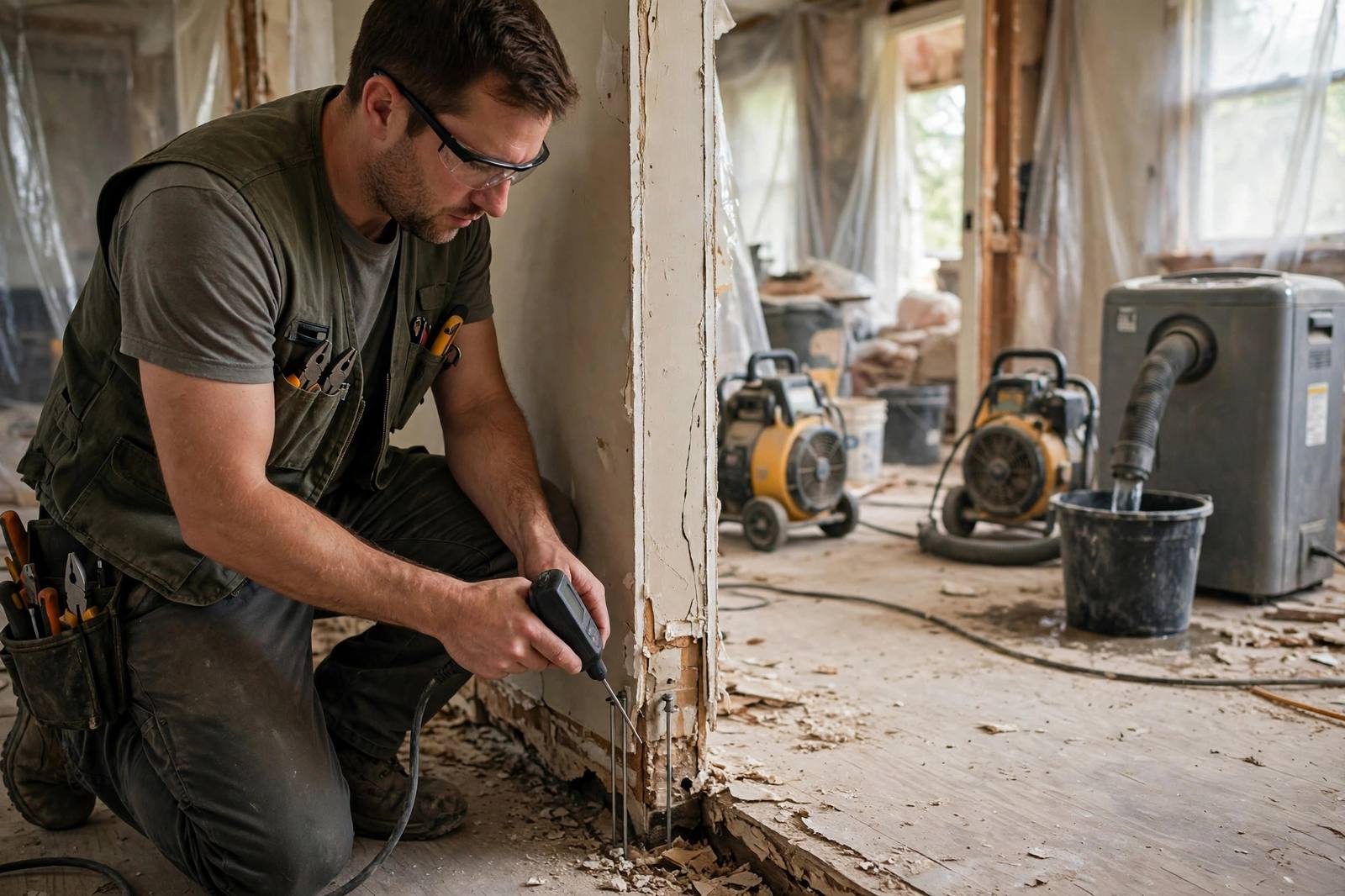
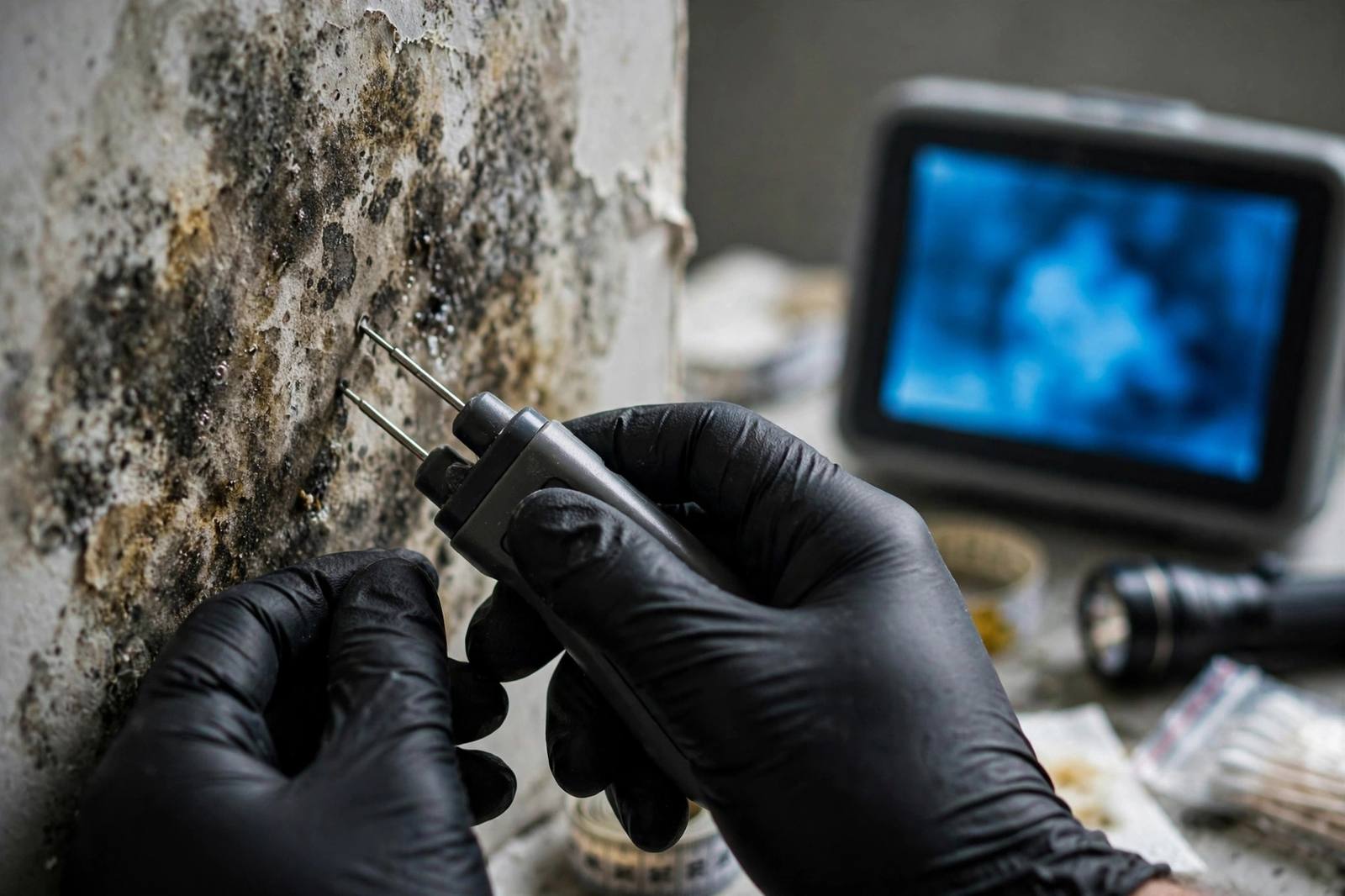
No work starts until we know where the moisture comes from. We use moisture meters and thermal imaging, measure the affected area, and write a scope of work you can read before we begin.
Contain the Area
Poly barriers seal the work area, and a HEPA-filtered negative air machine pulls air toward the work zone so spores don't drift into clean rooms.
Remove Contaminated Materials
Porous materials with growth, such as drywall, insulation, carpet, and ceiling tiles, are removed and bagged inside containment. Wood framing is cleaned with HEPA vacuuming and abrasive cleaning where needed.
Clean With HEPA Filtration
Surfaces that stay are HEPA-vacuumed and wiped, and an EPA-registered antimicrobial may be used where appropriate. HEPA air scrubbers run throughout.
Dry and Fix the Moisture Source
The area is dried to normal moisture levels, because mold returns to anything that stays wet. Fixing the source is part of the plan, and when it belongs to another trade, we coordinate it.
Verify the Result
Before containment comes down, we check visually and with moisture readings. If you want third-party verification, you can ask for independent post-remediation testing, and we'll give the tester access and a copy of our scope. There are no federal standards for airborne mold levels, so testing compares the work area with outdoor air or an unaffected room, and an independent tester should interpret it.
What the Equipment Does
| Equipment | What it does |
|---|---|
| Poly sheeting barriers | Seal the work area from clean rooms |
| Negative air machine with HEPA filter | Pulls air toward the work zone and filters it |
| HEPA air scrubbers | Remove airborne particles during the work |
| HEPA vacuums | Clean surfaces without blowing spores back into the air |
| Respirators, suits, gloves, goggles | Protect the crew and keep spores from being tracked out |
| Moisture meters and thermal imaging | Find moisture and confirm dryness |
| Air movers and dehumidifiers | Dry the area after removal |
Timeline and Cost: What to Expect
How Long Does Mold Remediation Take?
So how long does mold remediation take? It depends on the size of the area and how much material has to come out. Small areas often take a day or two, moderate areas take several days, and large or multi-room jobs can take a week or two. Drying and verification add time, and any rebuild comes after.
| Project size | Typical time |
|---|---|
| Small, under about 10 square feet | About 1 to 3 days |
| Moderate, about 10 to 100 square feet | About 3 to 7 days |
| Large, over 100 square feet or HVAC involved | A week or two, sometimes longer |
| Verification | Often 1 to 2 more days |
How Much Does Mold Remediation Cost?
How much does mold remediation cost? We won't guess a number here, because figures online run from a few hundred dollars to many thousands, and the real answer depends on your home. What moves the price: the size of the area, location and access (crawl spaces and attics cost more per square foot), how much material must be removed, the level of containment, fixing the moisture source, whether the HVAC system is involved, verification testing, and any rebuild. You get a written estimate after we assess.
Crawl Space and Basement Mold
Crawl Space Mold Remediation: Moisture First
Crawl space mold remediation follows the same steps as the rest of the house: containment, removal, HEPA cleaning, drying, and verification. The difference is access, which is tight, and the cause, which is almost always moisture: humid air through vents, groundwater, a plumbing or HVAC leak, or a missing vapor barrier. If we remediate and leave the moisture alone, mold can return within a season or two. For a permanent fix such as a vapor barrier, sealed vents, a dehumidifier, or drainage, we tell you what is needed and which specialist to bring in. See Crawl Space Water Removal.
Mold Removal Lynnwood: Why It Comes Back When Moisture Is Ignored
Mold removal Lynnwood homeowners pay for lasts only as long as the area stays dry. Mold remediation services that skip the moisture fix are the reason it returns. The usual sources are plumbing leaks, roof leaks, HVAC condensation, poor drainage around the foundation, wet crawl spaces and basements, and indoor humidity that stays high. Health agencies suggest keeping indoor humidity between about 30 and 60 percent, fixing leaks quickly, and drying wet materials within 24 to 48 hours.
Before we leave, we tell you what caused the moisture and what to do about it, even when that means calling a plumber, a roofer, or an HVAC technician.
Mold Remediation FAQs
Often, if it covers less than about 10 square feet of hard surface and the moisture problem is fixed. Wear gloves, goggles, and an N95 respirator, and clean with detergent and water. Call a professional for larger areas, mold on porous materials, mold after a flood or sewage backup, or anything near the HVAC system.
Color doesn't tell you. Any indoor growth should be handled carefully and dried out. If anyone in your home has health concerns, talk to a doctor.
Not as a routine fix. EPA and OSHA remediation guidance doesn't recommend bleach as standard practice, and it can't help mold inside porous materials. Never mix bleach with ammonia or other cleaners.
It depends on the size of the job. Small contained jobs often don't require it. Large jobs, or households with infants, older adults, or anyone with breathing problems or a weakened immune system, may want to stay elsewhere. We advise you after the assessment.
Not always. If mold is visible, the work can proceed without testing. Testing can help when mold is hidden, or to verify the result afterward, ideally by an independent tester.
Only if the moisture source isn't fixed.
Call (425) 845-0289 and we'll walk you through what to document.
Mold Won't Fix Itself.
Call (425) 845-0289 to schedule an assessment. We'll find the moisture source, explain what we see, and give you a written scope.
(425) 845-0289